In the aftermath of a large-scale radiological release, there will be a need to assess large groups of individuals and prioritize their care from immediate medical needs to potential long-term effects resulting from the radiological incident. Population monitoring is defined by the CDC as the tasks required to “identify, screen, measure and monitor populations (people and their pets) for exposure to radiation or contamination from radioactive materials”. As always, life threatening medical issues take priority of contamination issues. With the needs of large groups to be addressed, it is recognized that self-decontamination can provide many benefits (CRCPD, NCRP 165, NCRP 166, CDC). The criteria used to assess the remaining population may vary but requires that the technique specified incorporate the instrument detectability and survey technique into the assessment. Regardless of the approach utilized to manage large groups, it will be important to pair it with public messaging that provides clear instructions and helps to reduce the stress that comes with incidents. For incident specific Recommendations, contact the Advisory Team for Environment, Food and Health (A-Team).
Population monitoring “set points” is another area where the ROSS will have to navigate conflicting recommendations and poorly defined terminology. Values can range from “twice background” to 600,000 dpm/cm2. Another issue is that recommendations for personal contamination levels of concern are reported as the actual activity levels on the body (e.g., 1 uCi spot or 60,000 dpm/cm2) or by instrument reading (e.g., 1 mrem/h at 1m or 1,000 cpm). For values that use the instrument reading, the type of instrument and survey method become critical elements to carry out the recommendations. As always, the ROSS should work closely with the radiation authority in the community they are supporting to ensure that their recommendations will not conflict with local procedures.
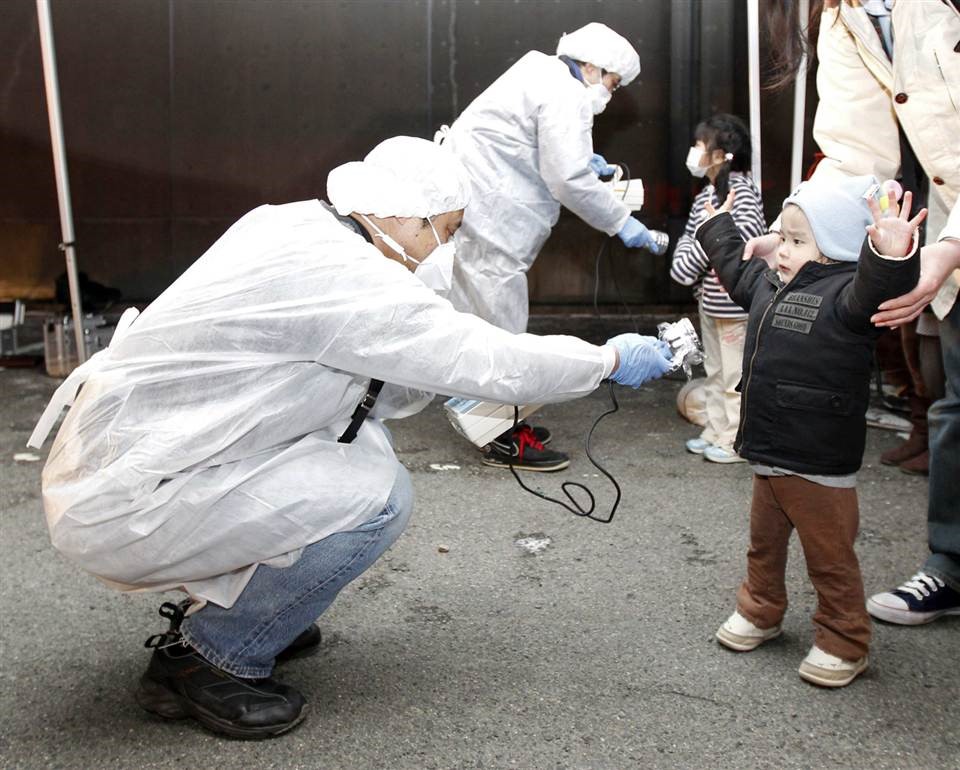
Population monitoring is an area that the ROSS has great flexibility in choosing monitoring and decontamination options. Recommendations derived from calculations that identify the amount of contamination that would be a threshold of an acute or stochastic effect of concern offer an important “top end” value to the range of options. If the monitoring needs are small compared to the resources available, then a much more conservative approach can be taken (e.g., decontamination even without detection of contamination) if it provides a psychological benefit to the victims.
The ROSS has an important role in helping a community select appropriate population monitoring methods and decision levels. Important consideration in this decision are:
-
What is the radiological and chemical nature of the contaminant?
-
What is the overall size of the population that needs to be monitored?
-
What is the monitoring and decontamination capacity (i.e., portal monitors, survey meters, supporting staff)?
-
Where is the monitoring/decontamination occurring? A hotline monitor could use a different value than a community reception center.
-
Are there any decontamination safety concerns (e.g., cold weather or lack of replacement clothing)?
-
Could the population monitoring staff and/or equipment be used on other tasks in the incident that would result in greater overall benefit?
There are 3 main Detection activities or levels that are important to population monitoring. There is no consistent terminology to describe these levels, so this document uses a hybrid of FEMA and NCRP definitions:
|
The video below demonstrates an example of a Contamination Detection Method using a Pancake GM probe. Once contamination is detected, a closer and stationary measurement is made and compared to a Decision Level.